

 Türkçe
 Deutsch
 Svenska
 Norsk
Norsk Русский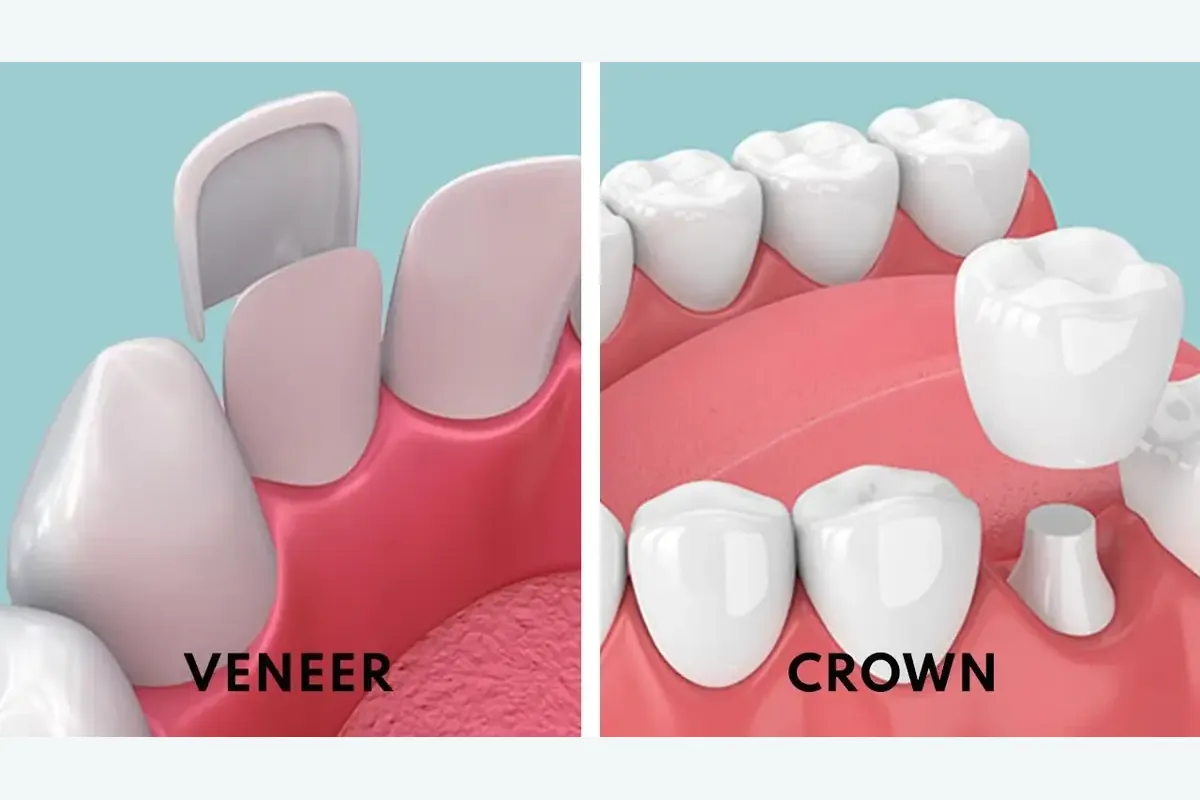
Who This Is For
Anyone quoted for veneers or crowns and unsure which they need
What We Cover
How much tooth each option removes, and how long each lasts
Our Approach
The most conservative option that solves the actual problem
Overview
Three Options, Three Different Jobs
Veneers, crowns and composite bonding are often presented as alternatives to each other, but they are really answers to different questions. Choosing between them on price alone is how patients end up with more tooth removed than they needed.
The useful question is not “which is best?” but “how much of this tooth is healthy, and how much does the restoration need to do?” The answer decides the technique.
Side by Side
How They Compare
A simplified comparison. Individual cases vary, and only an examination can confirm which applies to you:
Composite Bonding
Tooth-coloured resin shaped directly onto the tooth, usually in one visit with little or no drilling. Best for small chips, minor gaps and edge repairs. Typically lasts around 5–7 years and is more prone to staining.
Porcelain Veneers
Custom ceramic facings bonded to the front surface, made in a laboratory. Best for shade, shape and mild alignment concerns across several teeth. Typically lasts around 10–15 years with good care.
Crowns
Full coverage over the whole tooth. Appropriate for heavily filled, cracked or root-treated teeth that need protection rather than decoration. Typically lasts around 10–15 years.
Decision Guide
Which One Do You Actually Need?
As a rough guide — always confirmed by examination and X-rays:
The Tooth Is Damaged or Root-Treated
A crown is usually the correct answer. Here the extra reduction is justified because the tooth needs protecting from fracture, not just improving visually.
The Tooth Is Healthy but the Look Bothers You
Veneers or bonding. If a dentist proposes crowns across healthy front teeth purely for appearance, ask specifically why a veneer would not work.
One Small Chip or Gap
Bonding is often enough, and it keeps every other option open for the future because almost nothing is removed.
Tooth Preparation
“Peg Teeth”: Why It Happens and How to Avoid It
The images that made British headlines — rows of small, pointed stumps between appointments — are not a veneer problem. They are what teeth look like after being prepared for crowns.
A crown covers a tooth on all sides, so the tooth must be reduced on all sides. Do that to twenty healthy teeth and you get the photographs everyone has seen. The tooth structure removed does not grow back, and those teeth will need crowns for the rest of the patient’s life.
How it is avoided
- Minimal-prep laminate veneers. Where teeth are healthy and reasonably aligned, a laminate veneer bonded to the front surface removes a fraction of a millimetre — sometimes nothing at all — instead of circling the whole tooth.
- Orthodontics before cosmetics. If teeth are crooked, moving them is the conservative answer. Grinding them down to make crowns line up is the fast one. See orthodontic treatment.
- Crowns only where a tooth is already compromised — heavily filled, cracked or root treated. There, full coverage protects what is left.
- A written plan naming which teeth get what. If a plan says “20 crowns” without explaining why each tooth needs full coverage, that is the plan to question.
The honest test is simple: ask how much tooth will be removed, and why that much. A dentist practising conservatively will welcome the question. Our guide on what goes wrong in “Turkey teeth” cases covers the wider picture.
FAQ
Frequently Asked Questions
- What is the main difference between a veneer and a crown?
A veneer covers only the front surface of the tooth and preserves most of the natural tooth. A crown covers the whole tooth and requires much more reduction. Veneers are usually a cosmetic choice; crowns are usually a structural necessity.
- Is composite bonding cheaper than veneers?
Usually yes, and it can often be done in a single visit with little or no drilling. The trade-off is lifespan and stain resistance — composite typically needs repair or replacement sooner than ceramic.
- Can I have veneers if I grind my teeth?
It is possible, but grinding significantly shortens the life of any restoration and increases the risk of chipping. A night guard is usually recommended, and in some cases treating the grinding first is the better order of work.
- Do veneers stain over time?
Ceramic veneers resist staining very well. Composite bonding is more porous and can discolour with coffee, tea, red wine and smoking. Note that the cement margins and your surrounding natural teeth can still change shade over the years.
- Which option is the most conservative?
Bonding is generally the most conservative, followed by minimal-prep veneers, then conventional veneers, with crowns removing the most tooth structure. The most conservative option that solves your actual problem is usually the right one.
Related
Related Treatments & Guides


Send us your X-ray and we will tell you where you stand
A dentist reviews it and you get a written plan. No charge, no deposit, and no obligation to travel.