

 Türkçe
 Deutsch
 Svenska
 Norsk
Norsk Русский
Hollywood Smile: Understanding the Aesthetic Goal
Hollywood smile describes a desired appearance, not a single procedure. Use this page to explore the aesthetic goal and discuss which changes you actually want. For the order of appointments, see the smile makeover guide; for the planning and visualisation stage, see digital smile design.
Who This Is For
Anyone considering a full cosmetic smile change
What We Cover
What it includes, what is reversible, and what it costs you long term
Our Approach
Examination and a written plan before any tooth is touched
Overview
What Is a Hollywood Smile?
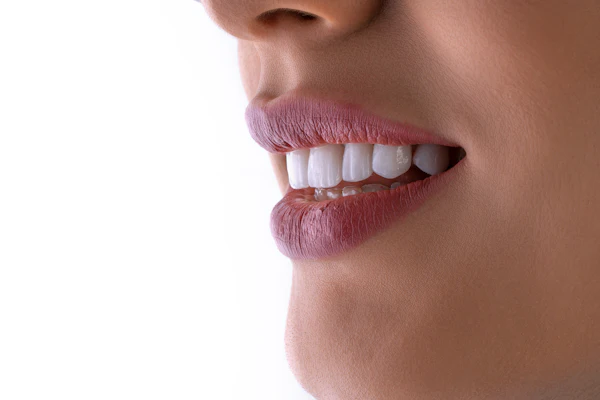
A “Hollywood smile” is not a procedure you can book — it is a description of a result. The term refers to the bright, symmetrical, well-proportioned smile associated with film and television, and it became a popular way for patients to describe the look they want.
Because it is an aesthetic goal rather than a clinical treatment, two people asking for a Hollywood smile may need completely different work. One may only need whitening and minor alignment; another may need veneers, gum contouring or implants. The right answer comes from an examination, not from a menu.
The Building Blocks
What It's Actually Made Of
Depending on your starting point, a smile design plan may combine several of the following:
Whitening
Lightens the natural shade of your own teeth. The most conservative option, since nothing is removed. Results vary by starting shade and are not permanent — they fade over time.
Veneers
Thin ceramic facings bonded to the front of the tooth. They correct shade, small chips, minor gaps and shape. Preparation is limited compared with crowns, but is still irreversible.
Crowns
Full-coverage restorations. Appropriate when a tooth is heavily filled, root-treated or structurally weak — not as a shortcut for purely cosmetic cases.
Orthodontics
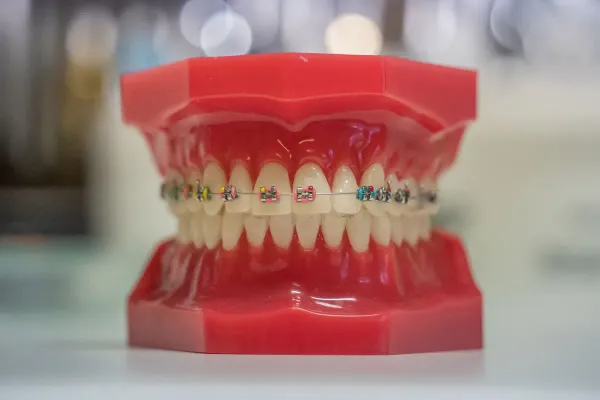
Moving teeth into better positions with aligners or braces. Slower than veneers, but it corrects the actual alignment rather than masking it, and removes no tooth structure.
Shade & Shape Design
Choosing a colour and tooth proportion that suits your face, age and skin tone. This is what separates a natural result from an obviously artificial one.
Gum Contouring
Reshaping the gum line where teeth look short or the smile shows a lot of gum. Often a small step that makes a large visual difference.
Be Honest With Yourself
Is It Right for You?
A smile makeover is a genuine commitment. These are the points we think patients should weigh before booking anything:
Health Comes First
Active decay or gum disease must be treated before cosmetic work. Placing veneers over untreated problems hides them rather than solving them.
Irreversibility
Veneers and crowns permanently change the tooth underneath. If a more conservative option can achieve most of what you want, it deserves serious consideration first.
Long-Term Upkeep
Restorations are not permanent. Expect them to need replacing eventually, and budget for that from the start rather than being surprised later.
Cost
What a Hollywood Smile Costs — and What a Package Includes
“Hollywood smile” is a marketing term, not a procedure, so a price only means something once you know how many teeth are being treated and with what.
- Per unit in the UK: veneers commonly £500 – £1,000 each; crowns £600 – £1,100.
- Per unit in Antalya: £150 for zirconia, £350 for E-max.
- A typical smile makeover covers 16–20 upper and lower front teeth, so the totals scale accordingly.
What an all-inclusive package should cover
- Consultation, panoramic X-ray and digital scans
- The agreed number of veneers or crowns, with the material named
- Temporaries between appointments
- Airport transfers and hotel for the treatment days
- Follow-up and guarantee terms in writing
What it usually does not cover: flights, any root canal or gum treatment found on examination, bone grafting, and a night guard if you grind. Ask about each explicitly — these are the items that turn a fixed price into a variable one.
Before committing to a full set, it is worth reading how much tooth structure each option removes: veneers versus crowns. Full price comparisons are in our UK versus Turkey guide.
Cost
What a Hollywood Smile Actually Costs
There is no fixed price for a "Hollywood smile" because it is not one procedure — it is a number of units in a chosen material. Decide how many teeth show when you laugh, pick the material, and the price is simple arithmetic.
| Treatment | GBP | USD | EUR |
|---|---|---|---|
| 8 upper E-max veneers The most common front-only makeover | from £2,800 | $3,785 | €3,255 |
| 10 upper E-max veneers Where a wider smile line shows | from £3,500 | $4,730 | €4,070 |
| 16 units, upper and lower E-max, the usual full makeover | from £5,600 | $7,570 | €6,515 |
| 20 units, upper and lower E-max, the widest smile line | from £7,000 | $9,465 | €8,140 |
| Zirconia alternative Per tooth, where strength matters more than translucency | from £150 | $205 | €175 |
| Whitening of remaining teeth So the untouched teeth match the new ones | from £175 | $240 | €205 |
Totals shown are starting figures for E-max at £350 per tooth. Zirconia brings the per-tooth price down to £150 and the strength up, at some cost in translucency. Root canal treatment, extractions or gum contouring, where genuinely needed, appear as separate lines on your written plan.
What It Really Is
"Hollywood Smile" Is a Look, Not a Treatment
The phrase describes an outcome — even, bright, symmetrical front teeth. How you get there varies enormously, and so does how much of your own tooth it costs you.
Some people arrive at that outcome with whitening and two hours of composite bonding. Some need eight laminate veneers. A smaller number, whose teeth are already heavily restored or root-treated, genuinely need crowns. These are three very different treatments with three very different prices, three different lifespans and three different levels of irreversibility — and they are routinely sold under the same two words.
This matters because the cheapest way for a clinic to deliver a dramatic photograph is to prepare twenty teeth for crowns in one week. It is fast, it is predictable, and it produces the look. It also removes a great deal of healthy tooth structure from people who did not need it removed. That is the practice behind most of the "Turkey teeth" coverage in the British press, and it is fair criticism.
Our position is straightforward: we plan the smallest intervention that achieves what you actually want. If that is whitening and bonding, we will tell you, and we will say it before you have booked a flight.

Choosing
Three Routes to the Same Photograph
Whitening and bonding
Nothing removed
- Right when
- Teeth are straight and sound, and the problem is colour, small chips or a gap
- Time
- Two to three days
- Lifespan
- Bonding 4–7 years; whitening 1–2 years between top-ups
- From
- £120 per tooth, whitening £175
Laminate veneers
0.3–0.7 mm of enamel
- Right when
- Colour will not shift with whitening, or shape and minor alignment need changing
- Time
- Five to seven days
- Lifespan
- 10–15 years
- From
- £350 per tooth
Crowns
1.5–2 mm all round
- Right when
- Teeth are already heavily filled, root-treated, cracked or badly rotated
- Time
- Five to seven days
- Lifespan
- 10–20 years
- From
- £150 (zirconia) or £350 (E-max)
Your Trip
One Visit, Five to Seven Days
Day 1
Design
Photographs, X-rays and a digital smile design. Tooth length, width, midline and shade agreed with you before anything is prepared.
Day 2
Preparation and temporaries
Preparation under local anaesthetic, digital scan, and temporaries fitted the same day — you are never without teeth.
Days 3–4
Laboratory
The laboratory layers and characterises your restorations. Your free days in Antalya.
Day 5
Try-in before glazing
You see the set in daylight, on your own face, and can still change length, shape or shade.
Days 6–7
Fit and finish
Bonding, bite adjustment, polish, and a check the next morning before your transfer to the airport.
What Is Included
What the Price Covers
Airport transfer
We collect you from Antalya Airport in our own clinic vehicle and take you back at the end. No third-party shuttle, no extra charge.
All imaging
Panoramic X-ray and, where the plan needs it, CBCT 3D imaging. Taken in the clinic, included in the treatment price.
Medication
Anaesthetic, antibiotics and any post-operative medication you need during your stay.
Follow-up checks
Every review appointment during your visit, and remote follow-up by WhatsApp once you are home.
Hotel and flights — just ask
Tell us the dates you have in mind and we will help you plan around them: which hotels near the clinic our patients tend to use, and which routes into Antalya are easiest from where you are. Message us on WhatsApp and we will talk it through.
Guarantee
Five Years, in Writing
Manufacturer Support and Material Documentation
Implant products are supported by the implant manufacturer under its own warranty terms. Free product support is subject to those terms and assessment of the issue. This is not a blanket promise of free repeat treatment, surgery, flights or accommodation. For zirconia restorations, the laboratory provides a raw-material certificate; this is not a lifetime or fracture-free treatment guarantee. Contact the clinic to clarify the applicable documentation and support before proceeding.
Honest Answers
The Conversation Worth Having Before You Book
What we will tell you
- Most people who ask for twenty units need fewer. Your smile line — the teeth that actually show when you laugh — is usually eight to ten upper teeth. We photograph it and show you rather than quoting a package.
- We will not crown healthy front teeth for colour alone. Whitening and veneers exist for that reason. A crown on a sound incisor costs it most of its structure, and a proportion of those teeth need root canal treatment later.
- The whitest shade is not the best shade. B1 and BL1 photograph brilliantly and read as artificial in British daylight. We show you both at the try-in. Your face, your call — but you will have seen the difference on yourself first.
- It is permanent. Enamel does not grow back and a prepared tooth needs a restoration on it for life. Every ten to fifteen years, that means a replacement. Budget for that, not just for now.
- Gum health decides how it ages. A perfect ceramic margin on inflamed gums looks wrong within two years. If you need hygiene treatment first, it goes in the plan before the veneers do.
FAQ
Frequently Asked Questions
-
How much does a Hollywood smile cost in Turkey?
It depends entirely on how many teeth are treated and in which material. Eight upper E-max veneers start at £2,800, ten at £3,500, and a full sixteen-to-twenty unit makeover between £5,600 and £7,000. Zirconia at £150 per tooth brings those totals down substantially — sixteen zirconia units start at £2,400 against £5,600 in E-max. You get an itemised quote per tooth before you book.
-
How many teeth are in a Hollywood smile?
Usually eight to ten upper teeth, because that is what shows when most people laugh. Sixteen to twenty is a full upper and lower makeover. We photograph your smile line and show you what actually shows, rather than quoting a fixed package.
-
Is a Hollywood smile veneers or crowns?
It can be either, and that is the most important question to ask any clinic. Veneers remove 0.3–0.7 mm of enamel; crowns remove 1.5–2 mm all round. If your teeth are sound, veneers or bonding are the right route. Crowns belong on teeth that are already heavily restored.
-
Will people be able to tell?
Only if the shade or the proportions are wrong. Natural results come from choosing tooth length and width that suit your face, keeping some translucency at the biting edge, and resisting the brightest shade on the guide. You see and approve everything at a try-in before the set is glazed.
-
How long does it take?
Five to seven days in Antalya for a full makeover, in a single visit. Preparation is on day two, the try-in around day five, and the final fit on day six or seven with a check the following morning.
-
Is it painful?
Preparation is done under local anaesthetic, so no. Some sensitivity to hot and cold for a week or two afterwards is normal while the teeth settle under their temporaries and then the final restorations.
-
How long will it last?
Ten to fifteen years for E-max and up to twenty for zirconia, with good hygiene and a night guard if you grind. The laboratory provides a zirconia raw-material certificate; this is not a blanket five-year treatment guarantee. Plan on replacement eventually — ceramic is durable, not permanent.
-
Can I have a Hollywood smile if my gums are receding?
Gum health is treated first. Recession, inflammation or periodontitis will make even excellent ceramic look wrong within a couple of years, because the margin becomes visible. Where that applies we plan hygiene or periodontal treatment before any preparation — it adds time and it is worth it.
Related
Related Treatments & Guides
Send us your X-ray and we will tell you where you stand
A dentist reviews it and you get a written plan. No charge, no deposit, and no obligation to travel.