

 Türkçe
 Deutsch
 Svenska
 Norsk
Norsk Русский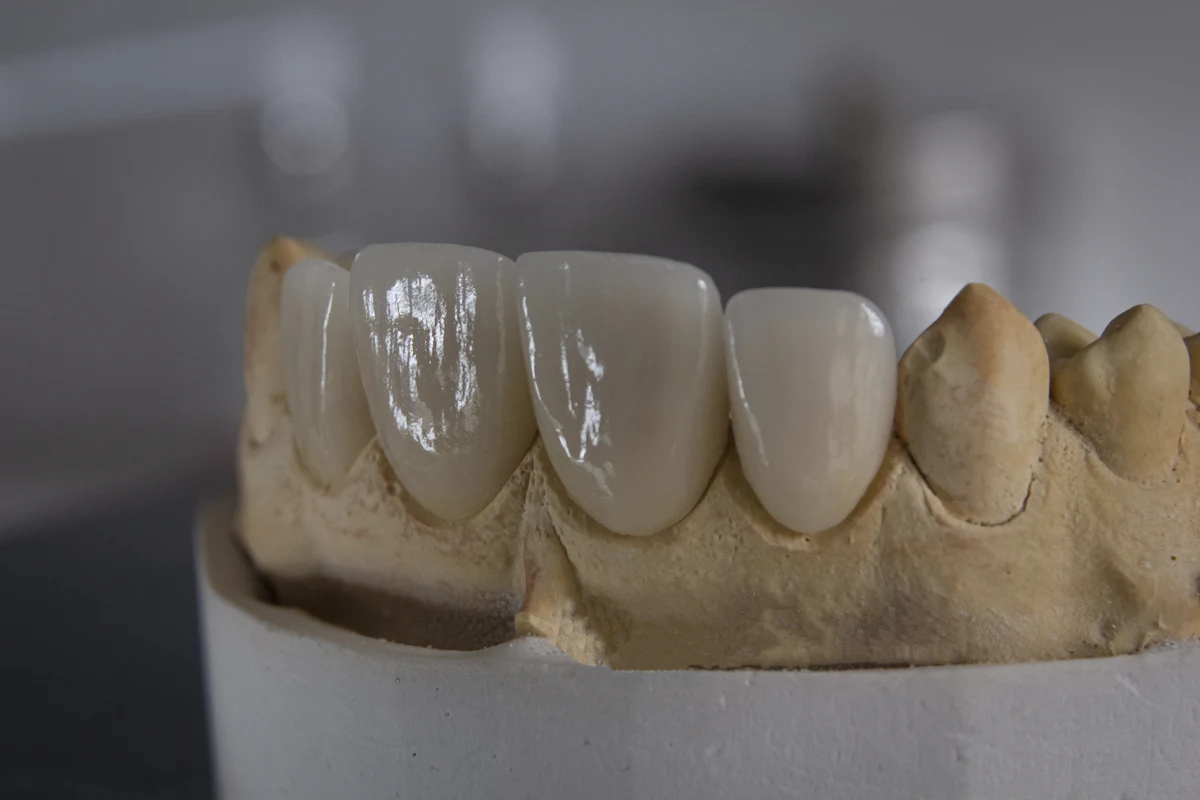
Overview
What You Are Actually Buying
Zirconia has quietly become the default material for crowns, and for good reason: it is strong enough for back teeth, it can be made to look convincing at the front, and it contains no metal. But “zirconia crown” covers several quite different products at quite different prices, and the differences matter more than most quotes admit.
This guide explains what you are actually buying, when zirconia is the right answer, when it is not, and what it costs in Turkey compared with the UK.
The Material
What a Zirconia Crown Is
Zirconium dioxide is a ceramic — a white, extremely hard material milled from a solid block by computer-controlled machinery rather than layered by hand. A crown is a cap that covers the whole visible part of a tooth, so it requires the tooth underneath to be reduced on all sides.
That last sentence is the one to sit with. A crown is not a veneer. A veneer covers the front surface only and removes far less tooth. If your teeth are healthy and the goal is purely cosmetic, a crown may be more than you need — our guide comparing veneers, crowns and bonding sets out which situation calls for which.
The three types you will be quoted
- Monolithic (full-contour) zirconia. One solid piece. Strongest option, most resistant to chipping, slightly less translucent. The sensible choice for molars.
- Layered zirconia. A zirconia core with porcelain layered over the front for better light behaviour. Looks better at the front, but the porcelain layer can chip.
- High-translucency zirconia. A newer generation that trades a little strength for a more natural look. Common for front teeth where appearance leads.
If a quote just says “zirconia crown” with a single price for your whole mouth, ask which of these three you are getting on which teeth. A good plan usually mixes them.
Comparison
Zirconia Compared With the Alternatives
How zirconia sits against the alternatives:
- Versus porcelain-fused-to-metal (PFM). PFM has a metal substructure. It works, but as gums recede over years a dark line often appears at the margin, and the metal blocks light in a way that reads as artificial. Zirconia has no metal and no grey line.
- Versus E-max (lithium disilicate). E-max is more translucent and generally the better-looking material for a single front tooth. It is weaker than zirconia, so it is a poor choice for molars or for anyone who grinds. Many good plans use E-max at the front and zirconia at the back.
- Versus doing nothing. Genuinely worth considering if the tooth is sound. Every crown costs healthy tooth structure permanently.
Cost
What Zirconia Crowns Cost: UK vs Turkey
Zirconia is where the cost gap between the UK and Turkey is widest, because a large share of the UK price is laboratory and overhead cost rather than the material itself.
| Procedure | UK, privately | Betadent, Antalya | Difference |
|---|---|---|---|
| Single zirconia crown | £600 – £1,100 | £150 | £450 – £950 |
| Zirconia crown on an implant | £800 – £1,400 | £175 | £625 – £1,225 |
| Full arch (10 units) | £6,000 – £11,000 | £1,500 | £4,500 – £9,500 |
The Betadent column is our published price, not an estimate. The UK column is an indicative private range. What moves your own total is the number of units and whether any root canal or gum treatment is needed first. A full price comparison across implants, veneers and whitening is in our Turkey versus UK price guide.
One caution on very low quotes: a crown priced below roughly £100 is unlikely to be a branded zirconia block milled to a digital scan. Ask what block brand is used and whether the fit is checked with a digital scan or a conventional impression.
Suitability
When Zirconia Is Right — and When It Is Not
Zirconia is usually the right answer when
- The tooth is heavily filled, cracked or root-treated and needs full coverage to survive.
- You need a crown on a molar, where bite forces are highest.
- You grind your teeth — monolithic zirconia tolerates it better than any other ceramic.
- You are restoring an implant and want a metal-free result.
- You have a metal allergy or want to avoid metal for any reason.
Zirconia is probably the wrong answer when
- Your teeth are healthy and the concern is colour alone — whitening or veneers remove far less tooth. See teeth whitening first.
- You want a single front tooth matched to natural neighbours — E-max often looks better.
- Only minor chips or gaps need correcting — bonding may be enough.
- Your gums are inflamed or untreated. Crowns fitted to unhealthy gums fail at the margin. Gum health comes first; see gum recession and periodontitis.
Lifespan
How Long They Last
Well-made zirconia crowns commonly last 10 to 15 years, and often longer. Zirconia itself effectively does not wear out — when a crown fails, the cause is nearly always something around it rather than the ceramic:
- Decay at the margin, where the crown meets the tooth. This is the most common failure and it is a hygiene issue, not a materials issue.
- Gum recession exposing the join over time.
- Grinding, which stresses the cement layer. A night guard is cheap insurance.
- Chipping of the layered porcelain on layered (not monolithic) crowns.
The practical implication: the thing that most determines how long your crowns last is what happens after they are fitted. Our guide on what makes cosmetic dental work last applies equally here.
Cost
What Zirconia Crowns Cost in Antalya
Per tooth, so the arithmetic is yours to do. Zirconia is our workhorse material — strong enough for molars, good enough for most front teeth, and the best value per year of service in the price list.
| Treatment | GBP | USD | EUR |
|---|---|---|---|
| Zirconia crown Per tooth, on a natural tooth | from £150 | $205 | €175 |
| Crown on implant — zirconia Per unit, multi-unit screw-retained | from £175 | $240 | €205 |
| Metal-ceramic crown Per tooth, where a metal substructure is preferred | from £110 | $150 | €130 |
| E-max crown or laminate veneer Per tooth, the more translucent option for front teeth | from £350 | $475 | €410 |
| Zirconia bridge Per arch on implants — full mouth from £1,800 | from £900 | $1,225 | €1,055 |
| Consultation and X-ray Free, in clinic and online | Free | Free | Free |
Ten zirconia crowns therefore start around £1,500 and twenty around £3,000. Where a tooth needs root canal treatment or a post before it can be crowned, those appear as separate lines on your plan — never as a surprise at the chair.
Types
Monolithic or Layered — and Why It Matters on Your Front Teeth
"Zirconia" describes a family of materials, not one product. The version that is unbreakable on a molar is the version that looks flat on an incisor, and the difference is worth understanding before you choose.
Monolithic zirconia
Milled from one solid block
- Best for
- Molars, bridges, grinders, and anyone who has fractured ceramic before
- Strength
- The strongest option we offer — chipping is very rare
- Appearance
- Good, but less translucent at the biting edge than layered ceramic
- Price
- from £150 per tooth
Layered zirconia
Zirconia core, porcelain surface
- Best for
- Front teeth where appearance is the priority and the bite is normal
- Strength
- Strong core; the porcelain surface can chip under heavy load
- Appearance
- Noticeably more lifelike — depth and translucency can be built in by hand
- Price
- from £150 per tooth
E-max
Lithium disilicate, no zirconia core
- Best for
- Front teeth, veneers, and the most natural result available
- Strength
- Excellent for front teeth; not our choice for molars or grinders
- Appearance
- The best of the three in daylight
- Price
- from £350 per tooth

Your Trip
One Visit, Five to Seven Days
Crowns are completed in a single trip because our laboratory turnaround is measured in days, not weeks. You are never sent home in temporaries waiting for a second flight.
Day 1
Examination and planning
Clinical exam, X-rays, shade selection and agreement on how many units and which material.
Day 2
Preparation and temporaries
Teeth prepared under local anaesthetic, digital scan taken, temporary crowns fitted the same day.
Days 3–4
Milling and finishing
Your crowns are milled and characterised in the laboratory. Free days for you.
Day 5
Try-in
Fit and shade checked before glazing, in daylight, with changes still possible.
Days 6–7
Cementation
Final fit, bite adjustment and polish, then a check the next morning before your airport transfer.
What Is Included
What the Price Covers
Airport transfer
We collect you from Antalya Airport in our own clinic vehicle and take you back at the end. No third-party shuttle, no extra charge.
All imaging
Panoramic X-ray and, where the plan needs it, CBCT 3D imaging. Taken in the clinic, included in the treatment price.
Medication
Anaesthetic, antibiotics and any post-operative medication you need during your stay.
Follow-up checks
Every review appointment during your visit, and remote follow-up by WhatsApp once you are home.
Hotel and flights — just ask
Tell us the dates you have in mind and we will help you plan around them: which hotels near the clinic our patients tend to use, and which routes into Antalya are easiest from where you are. Message us on WhatsApp and we will talk it through.
Guarantee
Five Years on Every Crown, in Writing
Our Written Guarantee
The implant itself carries a lifetime guarantee. Zirconia crowns and bridges, E-max crowns, porcelain veneers and Hollywood smile restorations carry a five-year guarantee against fracture and debonding under normal use; a fractured unit is remade at no cost for the restoration. You receive the guarantee in writing with your treatment documents. Travel and accommodation for a return visit are not included, and if you grind your teeth, wearing the night guard we provide is a condition of the guarantee.
Honest Answers
What Zirconia Does Not Do
Worth knowing before you book
- A crown is not a cosmetic shortcut. Preparing a tooth for a crown removes 1.5–2 mm all round. On a healthy front tooth that is a lot to take off for a colour change, and a meaningful share of heavily prepared teeth later need root canal treatment. If whitening or a veneer would do, we will say so.
- Zirconia does not whiten. The shade you choose is the shade you keep. Whitening your natural teeth first — before the shade is taken — is usually the right order, and we will plan it that way.
- Monolithic zirconia can look flat under a camera flash. On front teeth we normally recommend layered zirconia or E-max for that reason, even though monolithic is stronger and cheaper to remake.
- The gum line is the tell. A well-made crown looks right where it meets the gum, and that depends on healthy gums at the time of preparation. If you have gum inflammation, we treat that first — it adds a visit but it is the difference between a good result and a visible margin in two years.
- Grinding will shorten their life. If you grind, a night guard is part of the treatment and a condition of the guarantee.
FAQ
Frequently Asked Questions
-
How much is a zirconia crown in Turkey?
Zirconia crowns start at £150 per tooth at our clinic in Antalya, compared with roughly £800–£1,200 privately in the UK. Ten crowns therefore start around £1,500. Root canal treatment or a post, where needed, is quoted separately and shown on your written plan.
-
Is zirconia better than E-max?
Neither is better overall — they are better at different jobs. Zirconia is stronger, which makes it the right choice for molars, bridges and heavy bites. E-max is more translucent, which makes it the better-looking choice on front teeth. A typical full-mouth case uses both.
-
How long do zirconia crowns last?
Ten to twenty years is realistic with good hygiene and regular check-ups. Grinding without a night guard, untreated gum disease and skipping hygiene visits are what shorten that. Our five-year guarantee covers fracture and debonding under normal use.
-
Do zirconia crowns look natural?
Layered zirconia and E-max do, convincingly. Monolithic zirconia is strong but slightly more opaque, which can read as flat on front teeth under a flash. We will recommend the material by tooth position rather than fitting the same thing everywhere.
-
How many days do I need in Antalya?
Five to seven nights, in one visit. Preparation is on day two, a try-in before glazing around day five, and the final fit on day six or seven, with a check the next morning.
-
Will my crowns stain over time?
Zirconia and E-max are glazed ceramic and do not stain the way natural enamel or composite does. Coffee, tea and red wine will stain the natural teeth around them, which is why we normally whiten first and then match the crowns to the whitened shade.
-
Can a zirconia crown be fitted over an implant?
Yes — a zirconia crown on an implant abutment is the standard finish for a single implant. It is priced separately from the implant, at £175 per unit on an implant, so a finished single tooth is from £375. The implant price — from £200 depending on the system — covers the implant, the abutment and a temporary crown while the site heals. For bridges on implants we normally use zirconia on a titanium framework.
-
What if a crown comes loose after I get home?
Send us a photograph on WhatsApp. A crown that has debonded can often be re-cemented by a local dentist quickly; a fractured unit is remade under the five-year guarantee at no cost for the restoration. Travel and accommodation for a remake visit remain yours.
Send us your X-ray and we will tell you where you stand
A dentist reviews it and you get a written plan. No charge, no deposit, and no obligation to travel.