

 Türkçe
 Deutsch
 Svenska
 Norsk
Norsk Русский
 Español
 Français
Preventive Dentistry in Children
Medically reviewed by Dt. Şerife Kalken, dentist and founder · October 2026
Preventive Dentistry in Children
Preventive dentistry for children is built on a simple idea: it is far easier, cheaper and kinder to stop decay than to treat it. Tooth decay remains one of the most common childhood conditions, and it is very largely preventable.
When should a child first see a dentist?
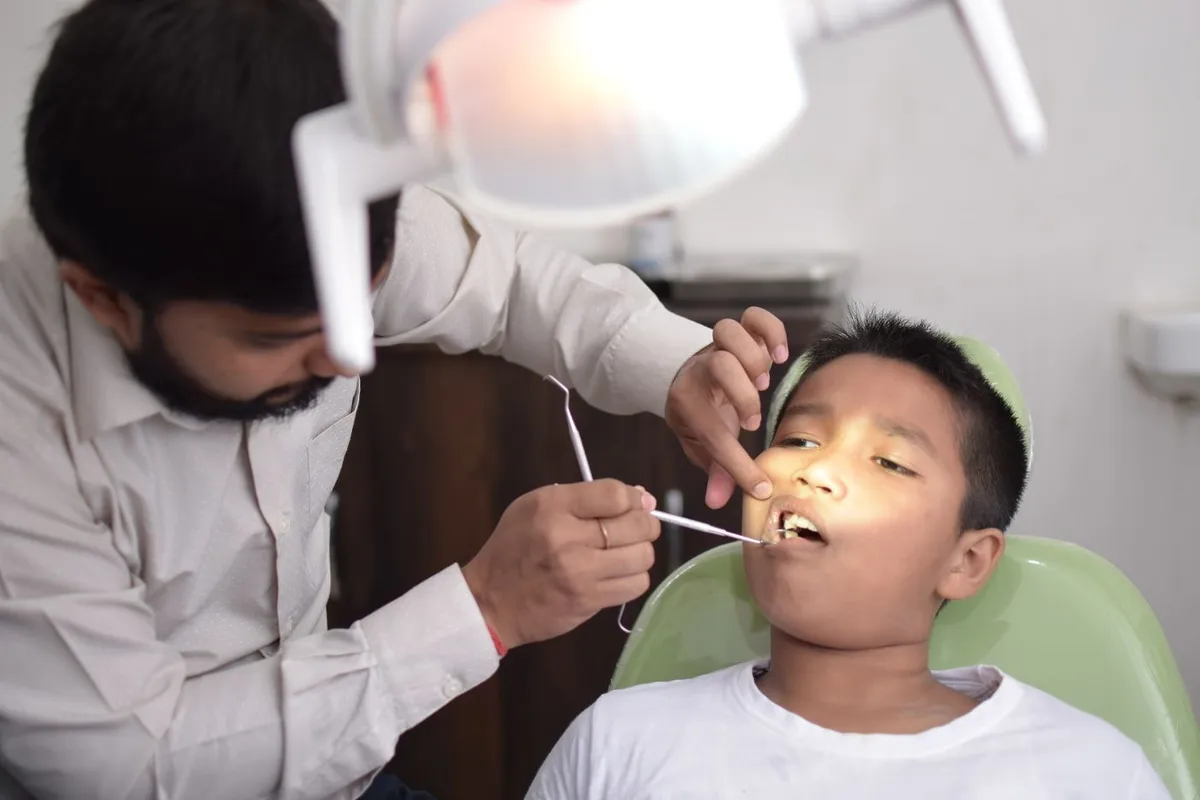
Around the first birthday, or within six months of the first tooth appearing — whichever comes first. This surprises many parents, because at that age there is usually nothing wrong. That is precisely the point. The first visit is about establishing the habit, checking that development is on track, and giving parents a plan. A child whose first experience of a dental chair is a friendly look and a ride up and down does not grow up frightened of dentists.
Fluoride varnish
A varnish is painted onto the teeth in a few seconds and hardens on contact with saliva. It strengthens enamel and can reverse the very earliest stages of decay before a cavity forms. It is typically applied two to four times a year depending on risk, and it is one of the most effective preventive measures available. It requires no drilling and no anaesthetic.
Fissure sealants
The chewing surfaces of the back teeth have deep grooves that a toothbrush bristle is physically too wide to enter. Sealants are a flowable resin that flows into those grooves and sets, leaving a smooth surface that can actually be cleaned. They are usually placed on the first permanent molars soon after they erupt at around age six, and again on the second molars at around twelve. No drilling is involved.
Brushing, by age
- From the first tooth: brush twice a day with a smear of fluoride toothpaste the size of a grain of rice.
- From age three: a pea-sized amount.
- Spit, do not rinse. Rinsing with water afterwards washes away the fluoride that has just been applied.
- Brush for them until around age seven. Younger children do not have the manual control to clean effectively, however willing they are. Standing behind them and tilting the head back gives the best view.
The part diet plays
What matters is not only how much sugar but how often. Each sugar exposure produces an acid attack lasting roughly twenty minutes, and enamel needs time between attacks to recover. Constant sipping and grazing keeps the mouth acidic all day, which is worse than the same quantity of sugar eaten at once with a meal.
- Keep sweet things to mealtimes rather than between them.
- Water and plain milk between meals; juice and squash only with food, and never in a bottle.
- Never put a baby to bed with a bottle of anything but water — milk pooling around the teeth overnight causes severe early decay.
- Check labels on medicines and vitamins; sugar-free versions exist for most.
Baby teeth matter
A common and costly misunderstanding is that baby teeth do not matter because they fall out anyway. They hold the space for the permanent teeth behind them: lose one early and the neighbouring teeth drift, leaving too little room and setting up crowding that later needs orthodontic treatment. Decayed baby teeth also hurt, disturb sleep and eating, and infection can damage the developing permanent tooth underneath.
Protecting teeth during sport
A custom-made mouthguard is strongly advised for contact sports. Front teeth are the most commonly injured, and a knocked-out permanent tooth is a lifelong problem. If a permanent tooth is knocked out, hold it by the crown rather than the root, keep it in milk or saliva, and get to a dentist immediately — the first hour matters enormously.
Frequently Asked Questions
When should a child first visit the dentist?
Around the first birthday, or within six months of the first tooth appearing, whichever comes first. The purpose of that first visit is not treatment but familiarity: checking development, giving parents a prevention plan, and making the dental chair an ordinary place so the child does not grow up anxious about it.
What are fissure sealants and does my child need them?
Sealants are a flowable resin painted into the deep grooves on the chewing surfaces of back teeth, where toothbrush bristles are physically too wide to reach. They set into a smooth, cleanable surface and involve no drilling. They are usually placed on the first permanent molars soon after they erupt around age six.
How much toothpaste should a child use?
From the first tooth, use a smear of fluoride toothpaste the size of a grain of rice; from age three, a pea-sized amount. Encourage spitting rather than rinsing with water, because rinsing washes away the fluoride. Brush for your child until around age seven, as younger children lack the manual control to clean effectively.
Do baby teeth really matter if they fall out anyway?
Yes. Baby teeth hold space for the permanent teeth developing behind them, and losing one early allows neighbouring teeth to drift, causing crowding that may later need orthodontic treatment. Decayed baby teeth also cause pain and disturbed sleep, and infection can damage the permanent tooth forming underneath.
Send us your X-ray and we will tell you where you stand
A dentist reviews it and you get a written plan. No charge, no deposit, and no obligation to travel.